Onward on the GR65
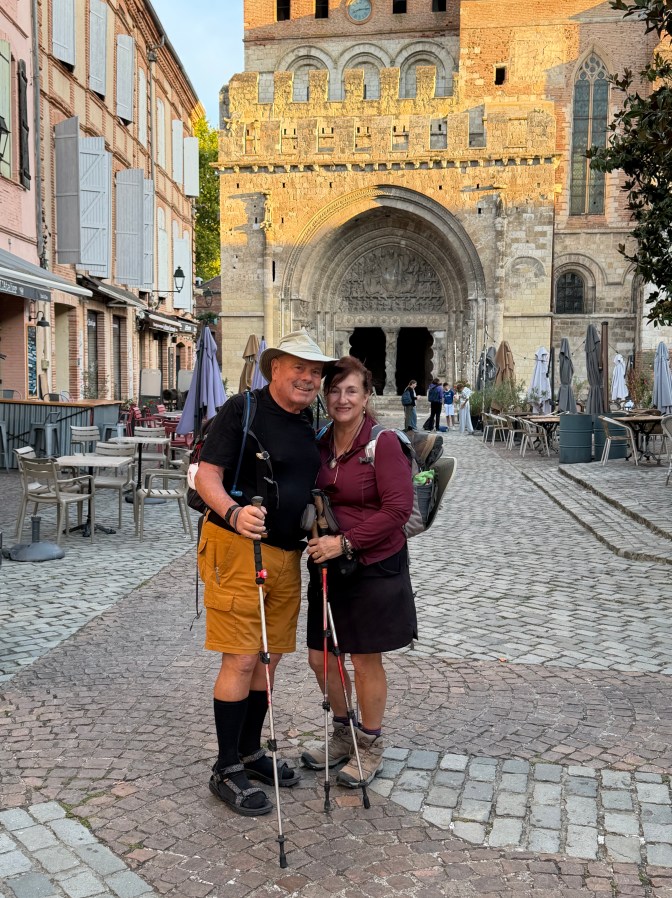
After leaving Lauzerte, we continued our walk through Moissac toward Lectoure, passing through countryside and historic villages along the Camino de Santiago. This stretch of the journey was rich in history, and each town seemed to have its own story.
We began in Moissac, a town closely tied to the Abbey of Saint-Pierre. Founded by Benedictine monks around the end of the 8th century, the abbey became one of the most important religious centers in southwestern France. Its Romanesque church portal and cloister made it an important destination for pilgrims traveling to Santiago de Compostela. For centuries, monks welcomed travelers and helped shape the town around the abbey. Moissac was also an important trading center because of its location near the meeting of the Tarn and Garonne rivers.
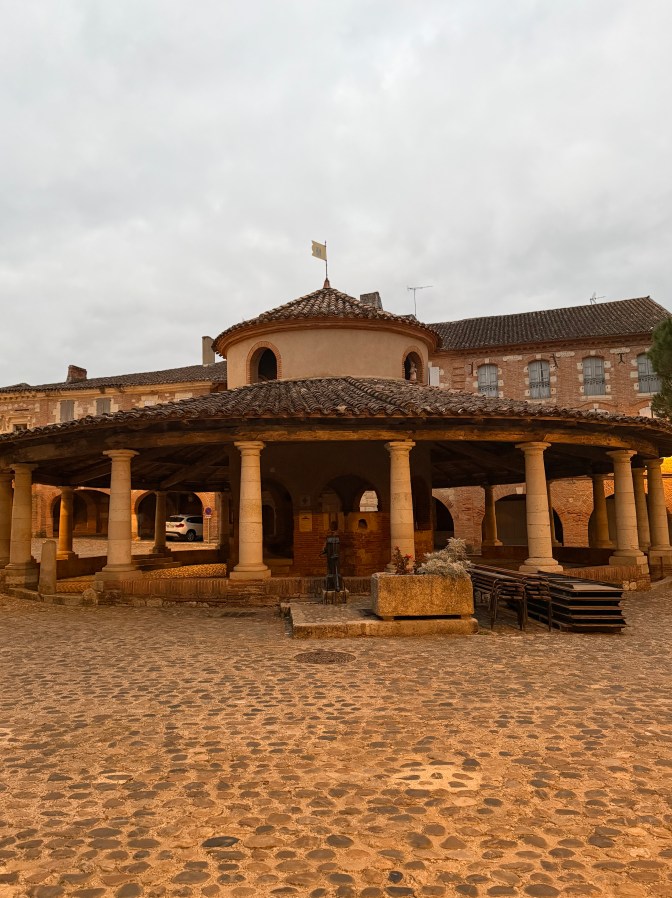
As we continued walking, we reached Auvillar, another of the officially recognized Most Beautiful Villages of France. Perched above the Garonne River, Auvillar dates back at least to the 11th century. Its position overlooking the river made it an important trading and shipping center. One of its most distinctive features is the circular covered market hall in the central square, a reminder of the role markets played in village life. Like Moissac, Auvillar was also an established stop along the pilgrimage route.
Further along our journey was Miradoux, a small medieval village in the Gers region. It dates to the 12th and 13th centuries, when it developed as a fortified bastide. The village grew around its central settlement and eventually acquired defensive walls. Its old market hall and Church of Saint-Orens still reflect its medieval character. Pilgrims traveling the Camino were welcomed here as well, and the village had a hospital dedicated to travelers.
We decided that a rest was in order, so we made Lectoure our destination for a few days. We were so happy we did!
Lectoure has a history reaching back to Celtic times, when a fortified settlement occupied the rocky promontory overlooking the Gers valley. Under Roman rule, it became the prosperous town of Lactora, an important regional center. Later, during the Middle Ages, it became the seat of the powerful Counts of Armagnac. Its elevated position, ancient stone buildings, cathedral, and remaining fortifications give the town a strong sense of history.
By the time we arrived, though, I think we were more interested in a comfortable bed and a good bath than in another history lesson!
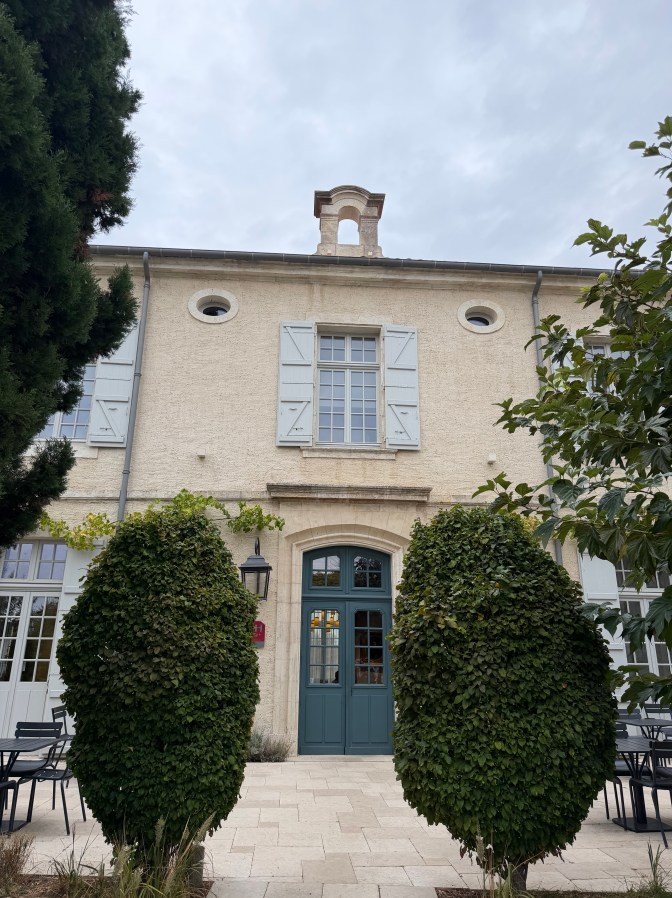
We were staying at the beautiful Hôtel Collège des Doctrinaires, and I have to admit that I was almost embarrassed when we first arrived. After walking for miles, we were sweaty, dusty, and very much like travelers who had spent their days on the road. The hotel was elegant and beautiful, and I couldn’t help feeling a little out of place arriving like that.
The building itself had an interesting history. Originally established in the 1630s as a Catholic college run by the Doctrinaire Fathers, it educated young men for generations. It later became a public school before eventually being transformed into the hotel we enjoyed. Its historic architecture had been beautifully restored, and the hotel had a direct connection to the thermal baths.
And we thoroughly enjoyed those baths!

Lectoure is known for its thermal waters, which are drawn from deep underground. The hot mineral water, discovered in 1979, emerges at approximately 42 degrees Celsius. The modern thermal center offers pools and bathing facilities for relaxation and well-being. After all our walking, the warm water felt like a wonderful reward.
We were happy we stayed, giving ourselves permission to slow down and enjoy this charming city. We wandered its streets, appreciated its beautiful architecture, and enjoyed the slower rhythm of life. Lectoure felt especially lovely, with the character and history of an old French town and a welcoming atmosphere that made us feel comfortable settling in for a while.
After so many days of walking, exploring, and moving from one place to another, Lectoure offered a different kind of pleasure. We could put our dusty walking boots aside, enjoy the comforts of our beautiful hotel, and simply rest.
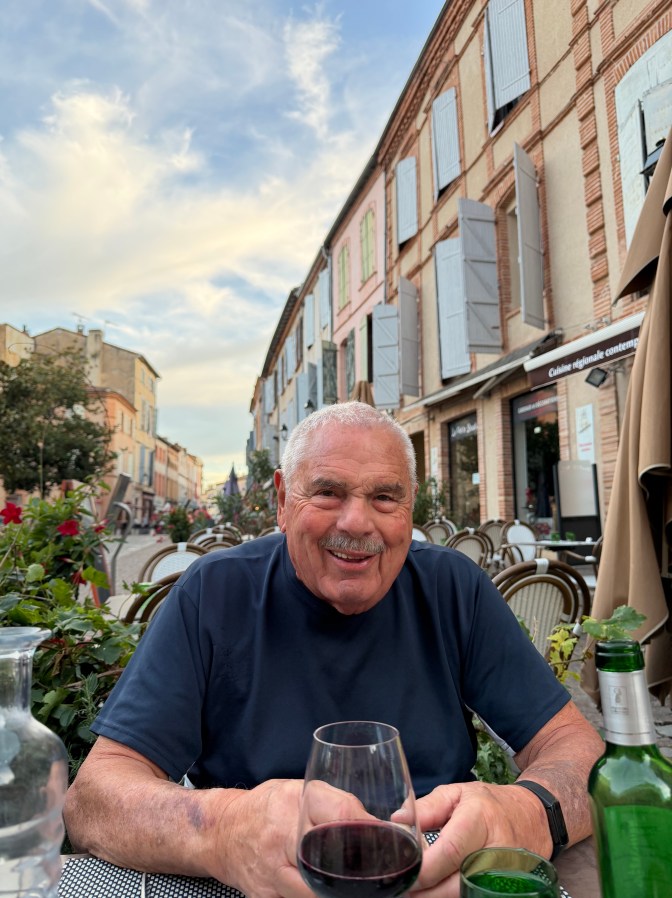
We followed paths walked by pilgrims for hundreds of years, passed through villages shaped by medieval trade and faith, and arrived in a town that offered us a chance to rest and rejuvenate.
I think our forefathers would have been proud of us.
You are loved…


