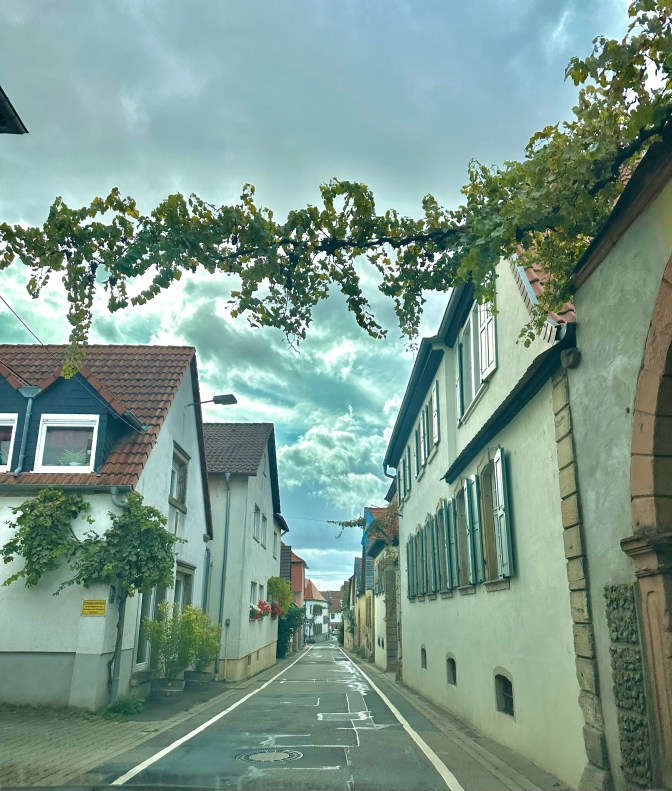
The autumn air along the Deutsche Weinstraße carries the scents of ripening grapes and wood smoke. Vineyards rolled over gentle hills like a patchwork quilt, their leaves shimmering gold and crimson in the fading light. Small German towns appear one after another—each with cobblestone lanes, half-timbered houses, and quiet courtyards where vintners poured samples of the year’s harvest. Before Oktoberfest arrives in Germany, the introduction of new wines is a significant event.
In Neustadt an der Weinstraße, the streets are lined with lanterns as locals prepare for a wine festival. One could pause beneath chestnut trees, savoring a glass of new wine—Federweißer—sweet, young, and alive, paired with delights still warm from the oven. Children laugh and play in the market square, their joyful voices blending with the sounds of fiddles and accordions. This is a joyous occasion for all.
Although we had traveled this route before, our excitement felt as fresh as if it were our first time.
Our destination was Rothenburg ob der Tauber, where we would stop for the day.
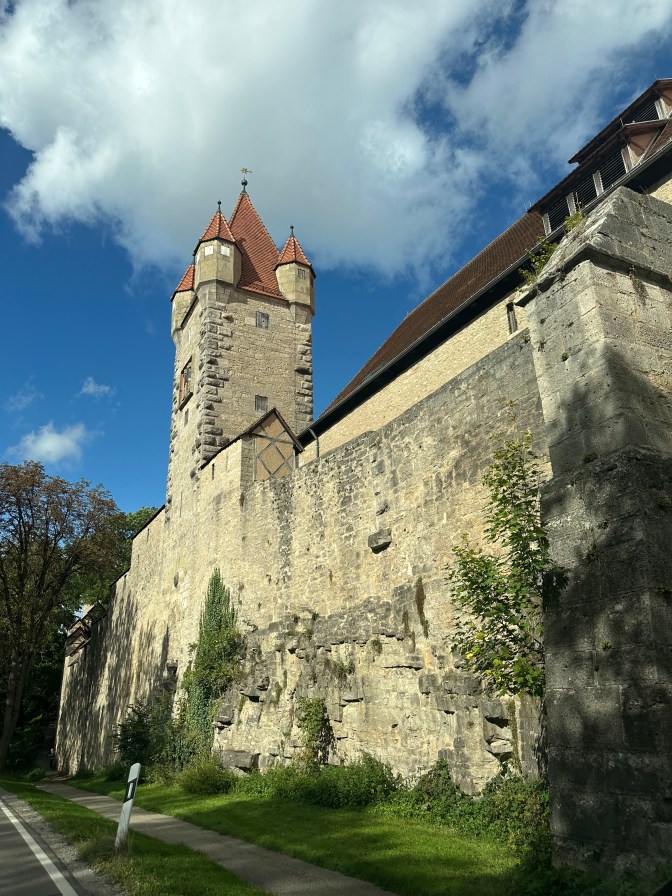
The road north wound through quiet villages, fields bordered by forests, and castles perched on misty ridges. As the day went on, we left the vineyards behind, following winding country roads until the silhouette of Rothenburg ob der Tauber appeared before us like something out of a dream. Its towers and walls glowed in the dusk, as if the town remembered every fairy tale ever told.
That evening, we checked into a centuries-old bathhouse just outside the walls of the city. Following a massive earthquake around 1400, natural springs on the slopes of Tauber erupted, releasing hidden waters rich in sulfur and metals that were said to possess healing properties. Here, the first bathhouse was built, and here is where we stayed. The innkeeper told us stories of how travelers once came here not for wine, but for healing baths drawn from deep springs.
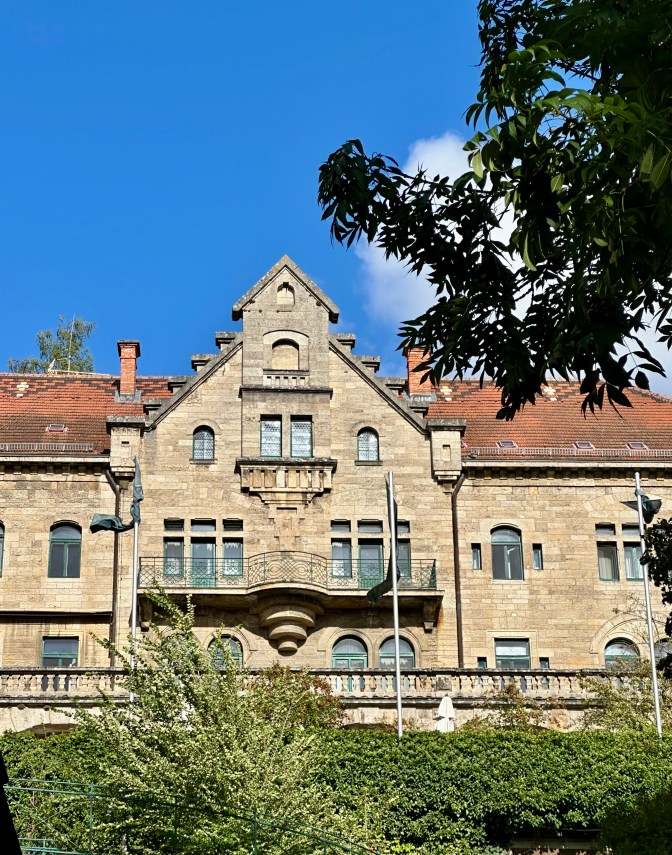
Thick wooden beams framed the stone hearth, and our room had a faint scent of lavender. The innkeeper, a kindly woman with knowing eyes, mentioned a little-known path that travelers rarely took, which would lead us directly into the Old Town. She gave us directions and nodded toward the stairs. We were enchanted. This Old Bath House nestled in the valley, with its thick stone walls and vaulted ceilings still resonating with the dampness of centuries when weary travelers sought the healing waters felt magical to us.
The air grew cool and damp as we wandered along the forest path that would eventually lead us to the heavy wooden door. When we pushed it open, it felt as though we had stepped into another era. At times, it felt like the village itself was breathing around us—a presence both ancient and secretive.
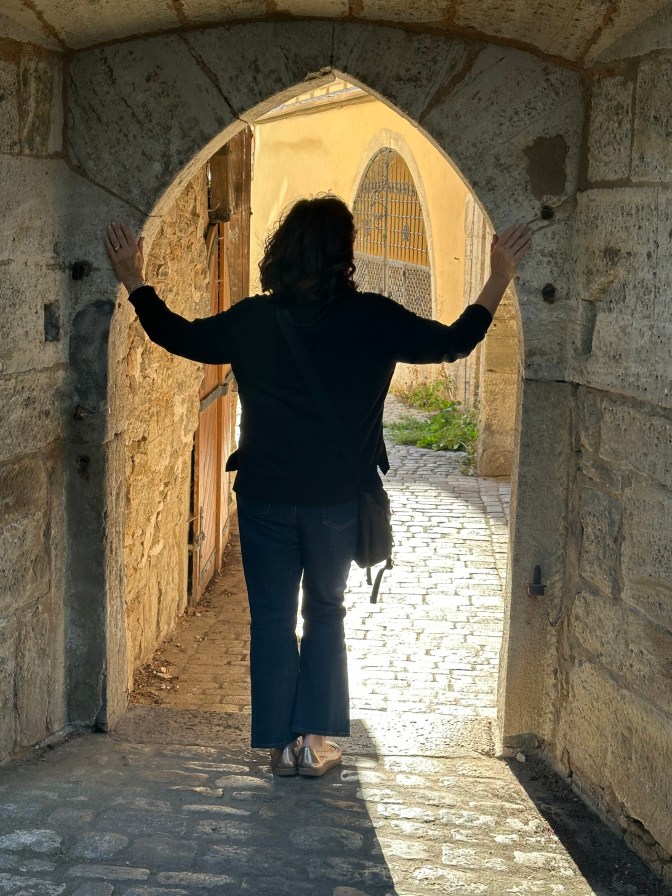
When we finally emerged, blinking in the late afternoon light, we found ourselves within the medieval walls, just steps from the heart of Rothenburg. It felt as if the town had invited us in through a private door, offering a quiet welcome reserved for those who listened to the whispers of the past.
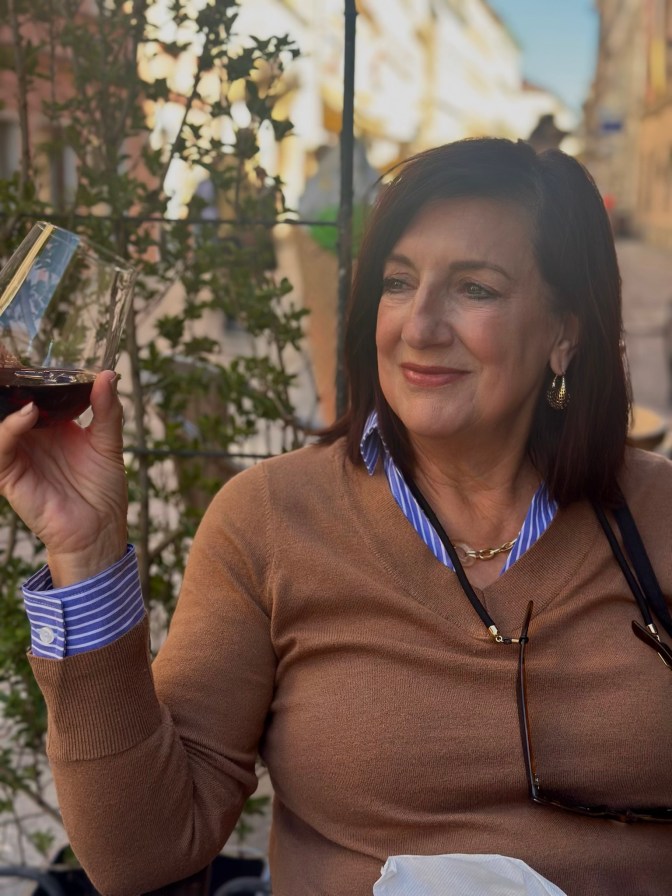
The medieval streets were hushed, and there were very few visitors as we walked along the cobblestone streets. As the sun began to set, it cast a golden light on the carved doorways and shop signs. The air smelled faintly of spiced wine and lavender once again. I was sure the town had been waiting for us alone.
That evening, as we sat in the market square with a glass of Franconian wine, we gazed back toward the valley. Although the Old Bath House was out of sight, we held onto the innkeeper’s secret and the memories and stories of stone passages that linked wine country, history, and the vibrant essence of Rothenburg.
As we returned to our room, the tranquility of the valley enveloped us. Through the window, the silhouette of Rothenburg’s walls loomed against a sky pierced with stars. We now understand why travelers have come for centuries. The town was not merely a place on a map—it is a story that opens itself to those willing to follow winding roads, vineyards, and whispers of the past to discover it.
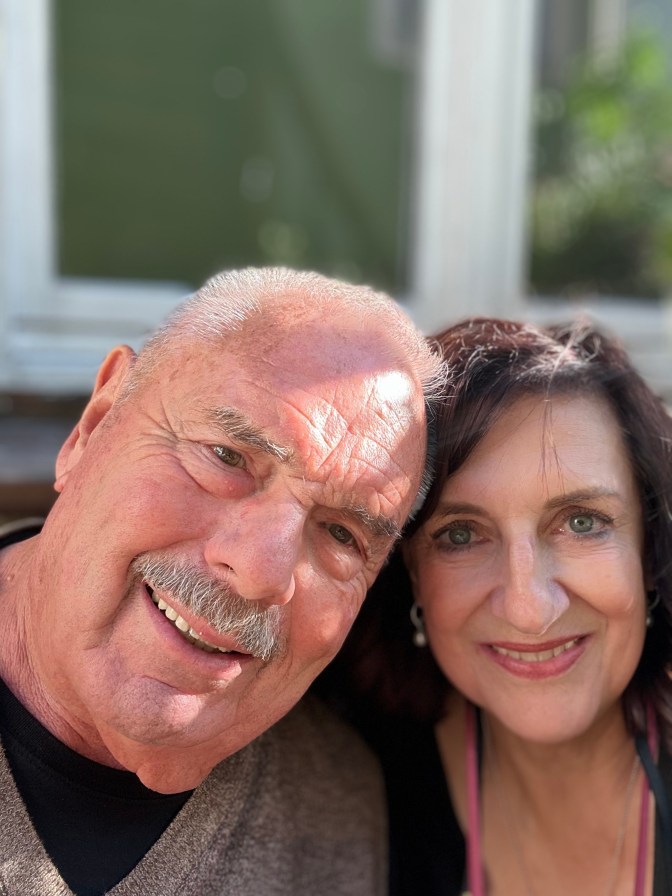

 Tom and Nancy’s Journeys
Dear Ones, thank you for sharing your joy, your adventures and your sweet journey together. I feel as though I
LikeLike
What an incredible journey!
LikeLike