Although we had spent a fair amount of time in Spain, there were still several iconic places we had not yet visited. Ronda was one of them. So, after our walk through Northern Spain was completed, we, along with our friends, the Martinas, decided to take a holiday together. We picked a couple of places we had always wanted to visit and set off to do just that. Ronda was first on the list.
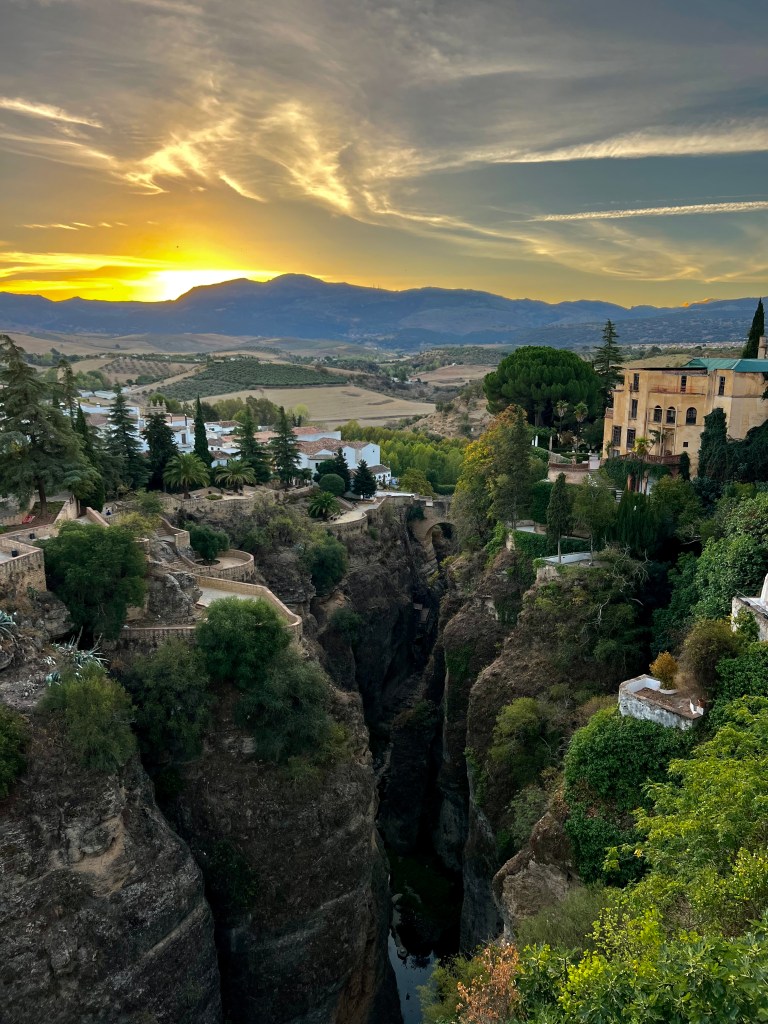
We arrived in Ronda after some exciting travel. Suffice it to say we arrived in one piece, and the last thing our driver said to us before he dropped us off was that we would find Ronda to be “muy tranquil.” That’s just what we needed.
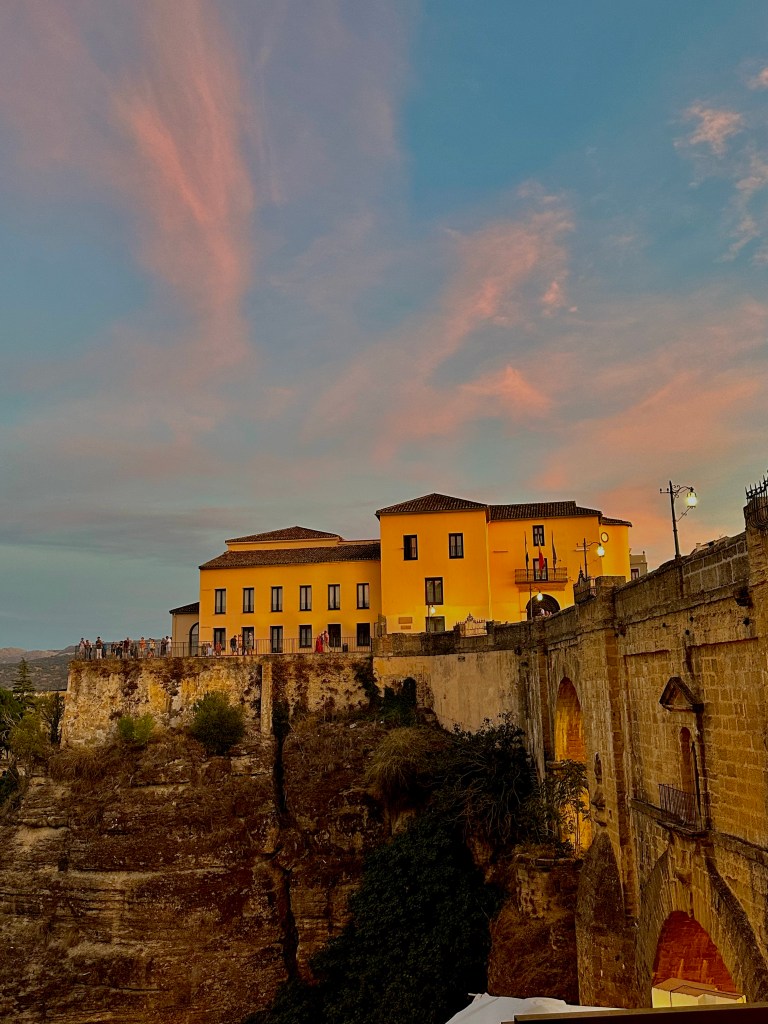
Ronda is an ancient city in Andalusia. The Romans, Muslims, and Catholics have dominated it at one time or another, and you can still see the influences of those cultures today. We were fortunate to stay in the Parador, once the town hall in Ronda. We were in awe of the views of the Puente Romano, Puente Viejo, Puente Nuevo, and the Tajo Canyon. Words and pictures do no justice to the architectural beauty of this area.
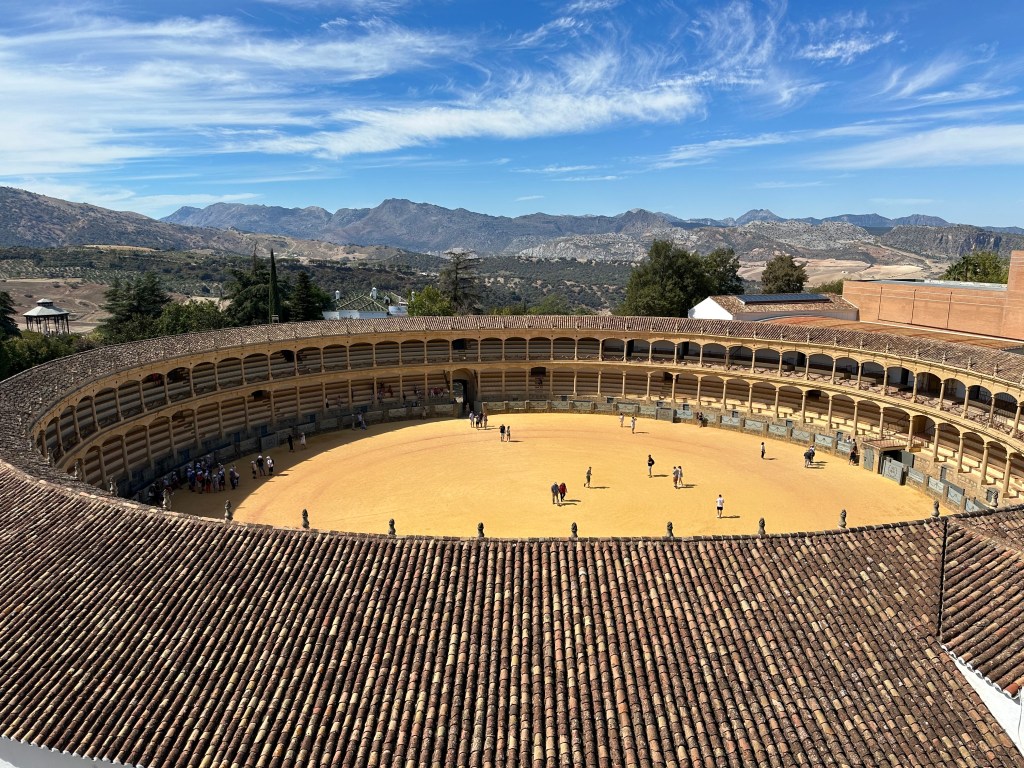
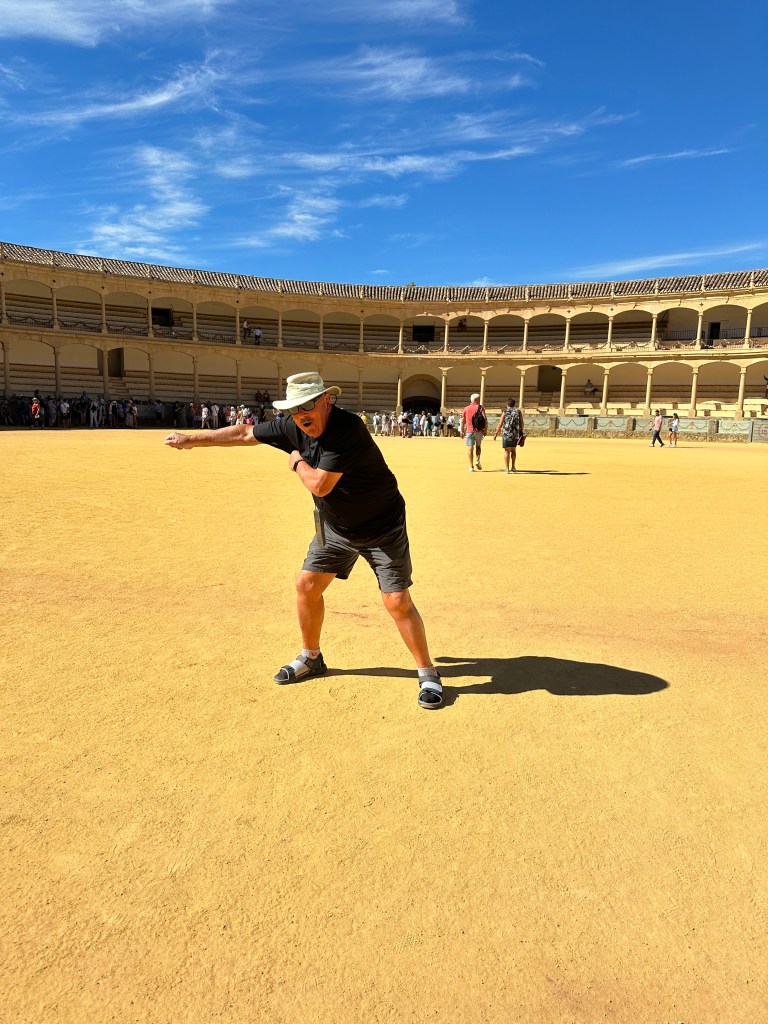
We were across the way from the Plaza de Toros de Ronda, Spain’s oldest bullring. It was built in 1784 by Jose Martin de Aldehuela, who also designed the Puerto Nuevo. It is said that this ring was where Francisco Romero first introduced fighting bulls on foot with a muleta or cape. Bullfighting remains in Spain and is held once a year in this ring.
I loved Ronda, and I am happy to have spent some time in this area of Andalusia. There is something about the Pueblo Blancos nestled in pockets of olive groves that makes my heart happy whenever I am here.
It was hard to leave, but once we checked into our condo overlooking the Alboran Sea (the westernmost part of the Mediterranean Sea), I knew I was exactly where I was supposed to be. Once again, a whole new life awaited us.
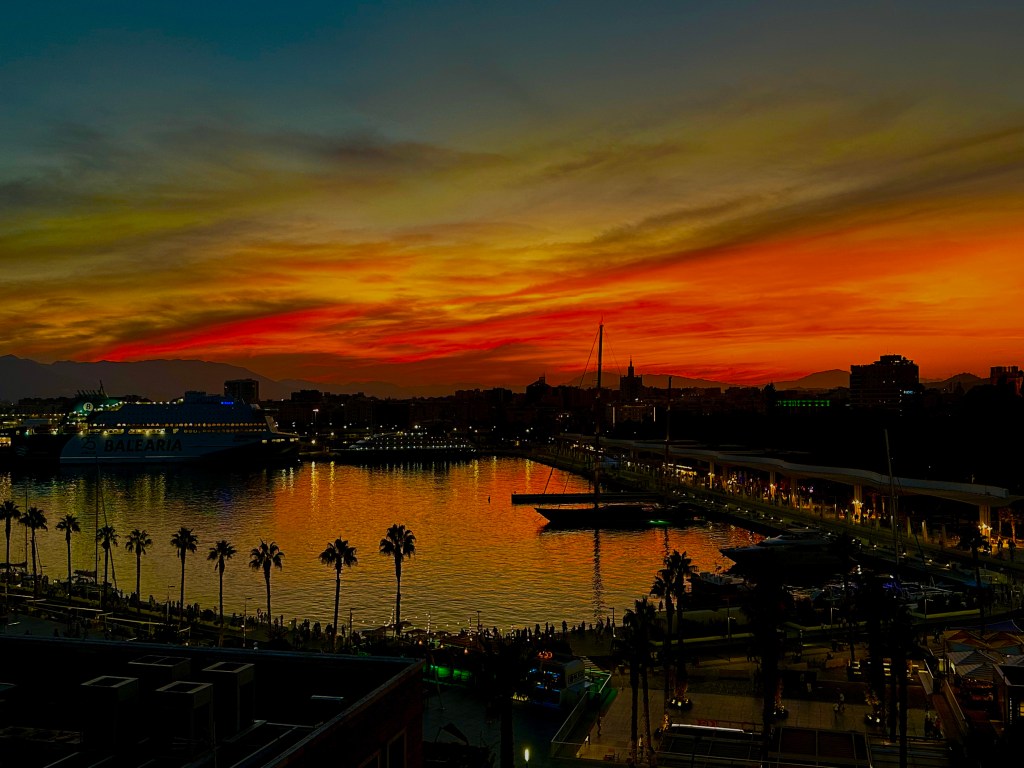
Malaga is the capital of Andalusia and lies in the Costa del Sol or Coast of the Sun. The skies are blue, the sun is warm, and the ocean is spectacular. The only thing that surpasses any of this is the sunsets, which we enjoyed every night from our penthouse view on the ninth floor. One never tires of this view, and we would stop any activity to ensure we were in this spot to enjoy this nightly event.
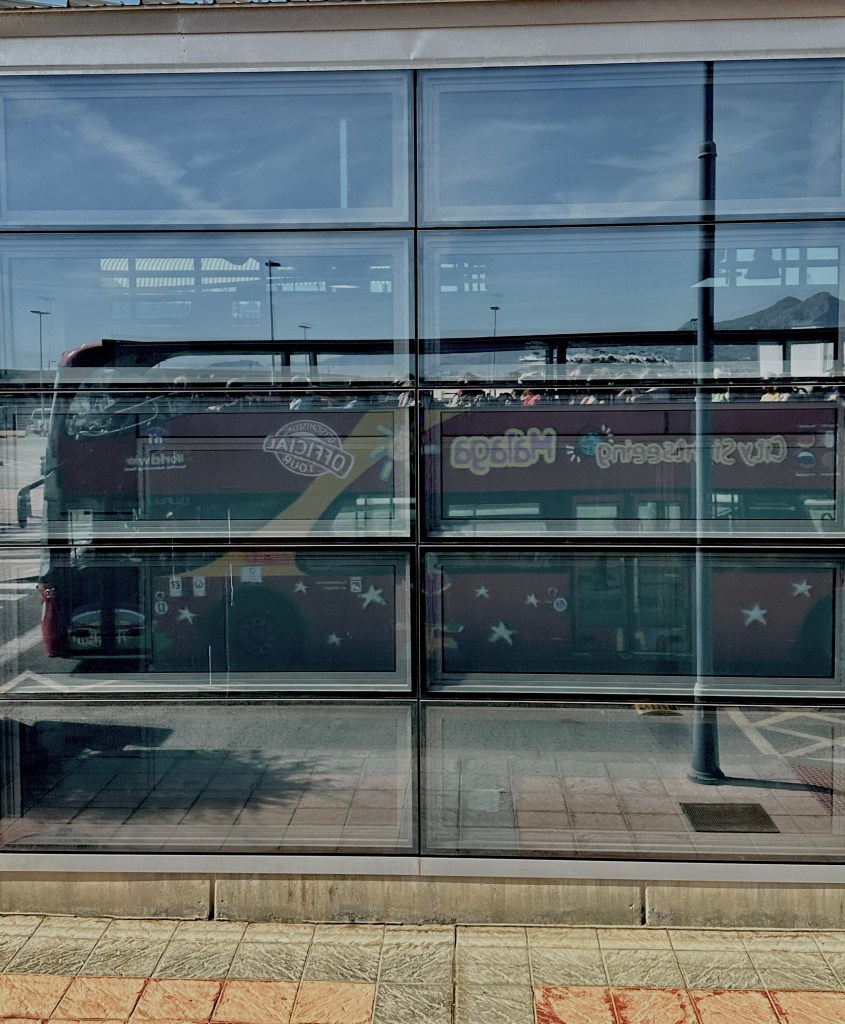
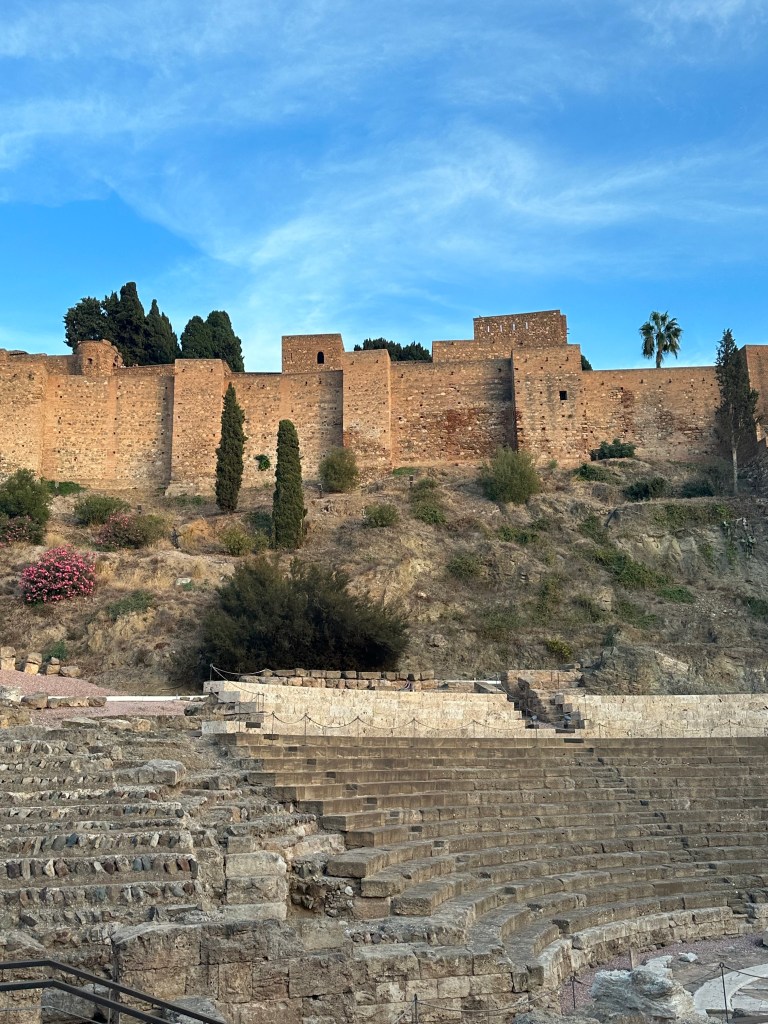
We rode on a double-decker bus to get the lay of the land. Malagas history spans about 2800 years, making it one of Europe’s oldest continuously inhabited cities. We explored the Castle of Gibralfaro and the Alcazaba, the royal residence in the thirteenth and fourteenth centuries. I found it very interesting that the Roman theater dating from the first century was only rediscovered in 1951. What an amazing archeological find.
Malaga is also the birthplace of Picasso. This city is proud of its native son. The Picasso Museum was created to honor the artist’s work and promote and encourage artists from around the world. It also houses the oldest architectural remains in the city—the original walls of this Phonecian city have been preserved in the cellar of this museum.
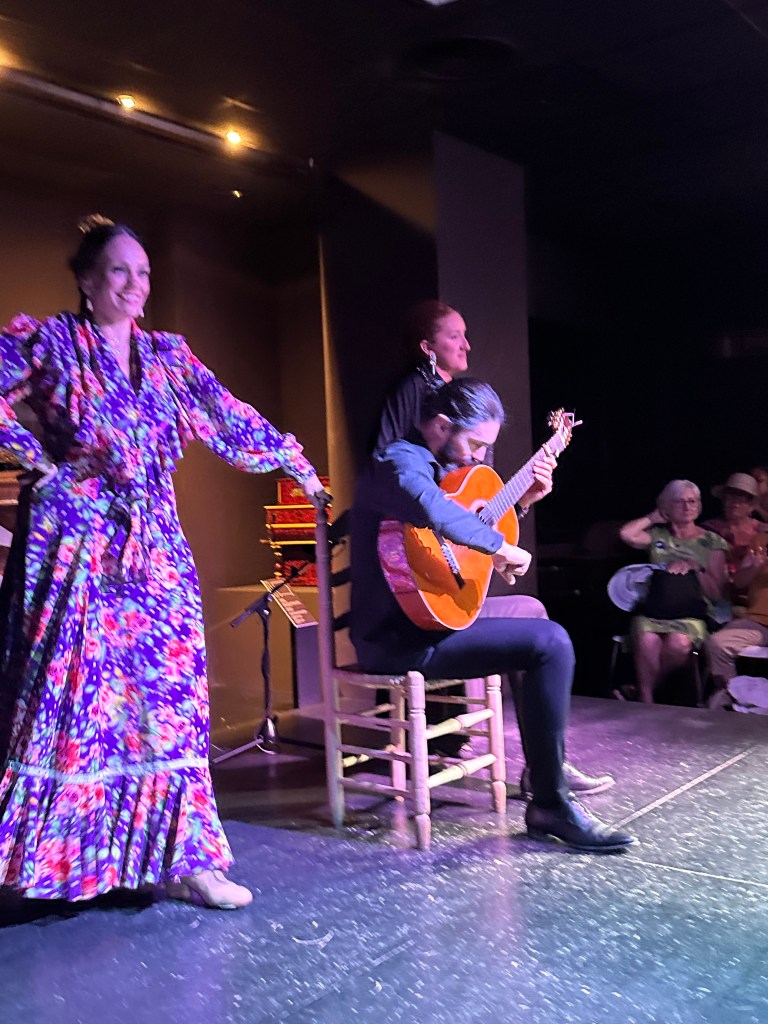
Our host recommended a Flamenco show and a few restaurants; his suggestions were impeccable. My favorite was Casa de Lola, a popular tapas place. I knew it would be worth it when we showed up at 9:00 in the evening and had a 45-minute wait to be seated. It was. When we walked home at midnight, I knew I had been converted to the Spanish way of life. They are always up for a good meal and time and often do so till the early morning hours.
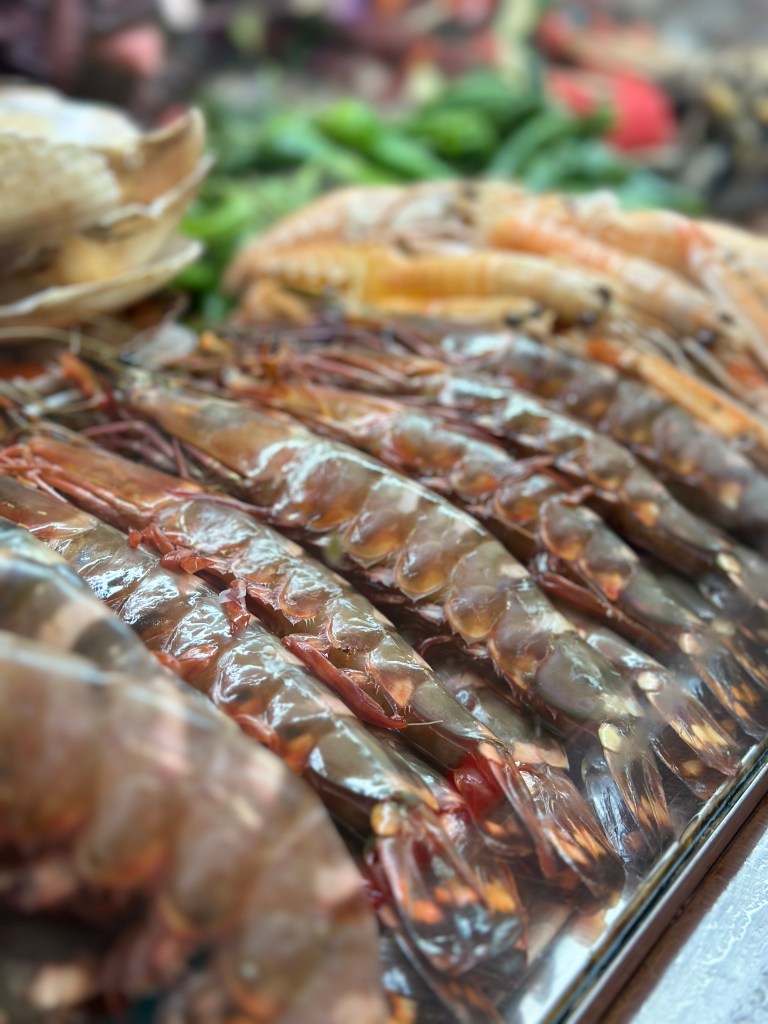
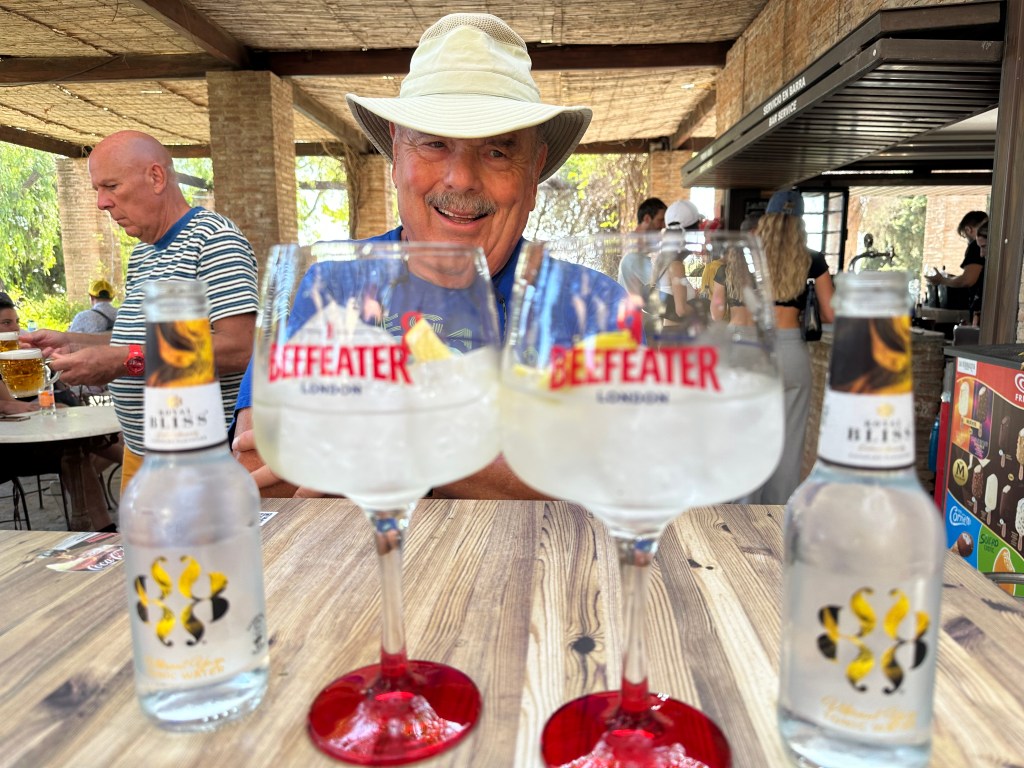
We walked along the famous Larios Street, then the central fish and produce markets. The street vendors were out, and we enjoyed looking at what they offered. One day, we took a catamaran for a bay cruise and got a different perspective of the city. We walked for hours and enjoyed this time with our friends. We had fresh grilled sardines on our beach days. We cultivated our fondness for gin and tonics.
We parted company as they left for home, and we headed to Rota to begin our return home. It has been fantastic, but I am yearning to be home now.
You are loved…

 Tom and Nancy’s Journeys